Weight Lifting for Bone Density and Muscle Strength?
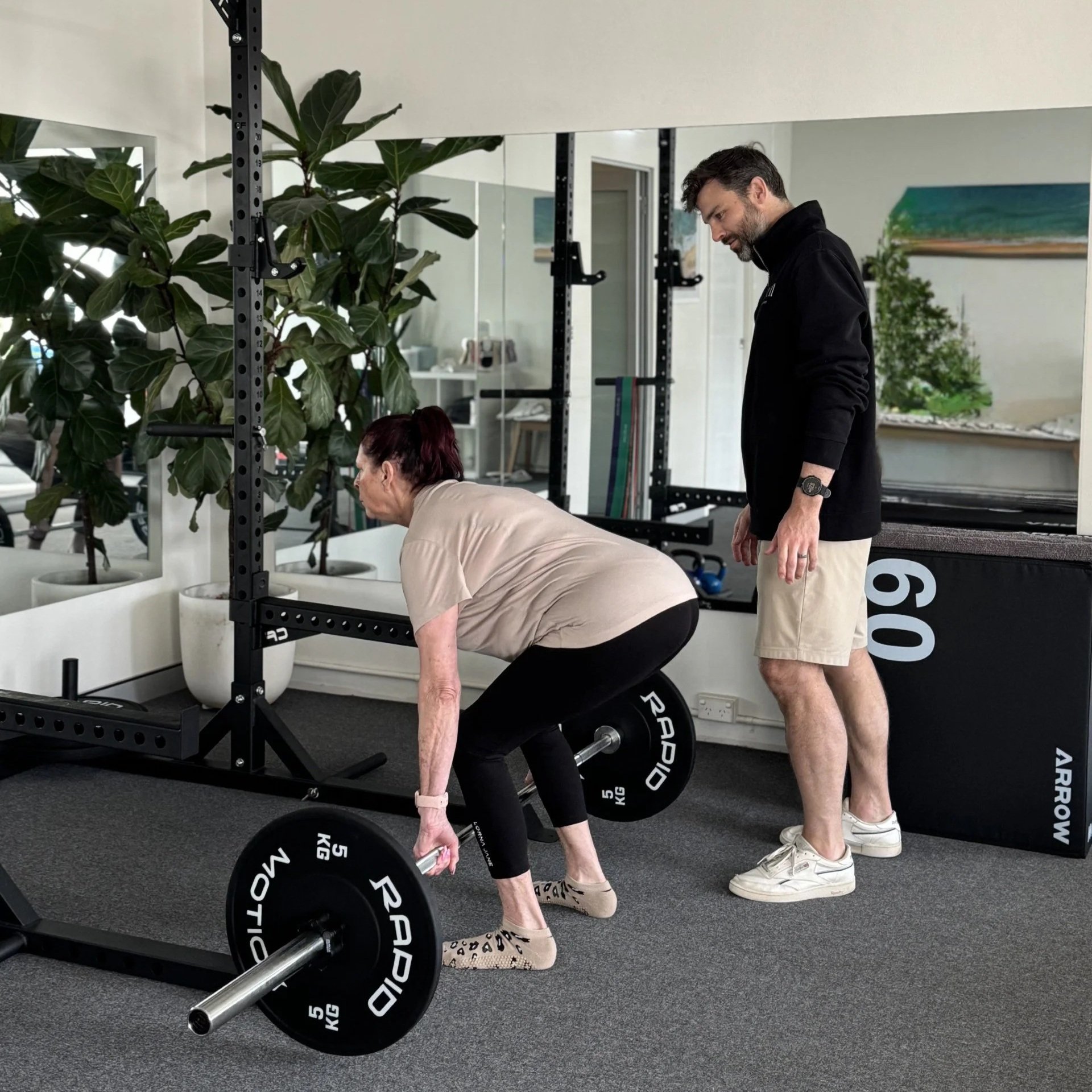
Swell is excited to share the newest addition to our clinic - a squat rack!
A squat rack allows us to use more weight within our physio and Pilates sessions, to help people that require extra resistance in their exercise. Squat racks are commonly used by athletes or during gym training - they are also an effective and safe tool that our physiotherapists are experienced in using for injury rehabilitation.
Current exercise guidelines recommend regular resistance training for perimenopausal and postmenopausal women to support muscle strength, bone health and overall function. Introducing a squat rack into our clinic gives us more opportunities to provide progressive, individualised strength programs in a safe and supervised environment.
What does a squat rack have to do with perimenopause?
Women are at risk for osteopenia and osteoporosis during perimenopause - due to changes in bone mineral density.
Strength training has shown to build bone density and preserve muscle mass by mitigating declining oestrogen, the cause of decreasing bone density.
Placing mechanical stress on bones, such as using a squat rack, works to stimulate bone-forming cells helping to rebuild your bone density.
Unsure? Little experience with weight-training? Never lifted weights before? Our experienced physiotherapists can slowly guide and instruct you, beginning with:
Body weight movements
Light resistance
Clear guidance and support
Interested in whether resistance training is right for you? Here are some things to consider:
1. Changing Bone Mineral Density
Perimenopause is a natural process for women, accompanied by increasing bone re-absorption and decreasing bone mineral density. Studies have shown women can lose up to 20% of bone mass during the 5 years following their final period.
These changes can lead to conditions such as osteopenia and osteoporosis.
Half of women over 60 years of age have lower than normal bone density (osteopenia).
One quarter of woman have more severe bone loss (osteoporosis).
Oestrogen works to protect bones by inhibiting bone re-absorption and reducing bone breakdown.
Declining oestrogen levels during perimenopause causes accelerated bone loss, leading to weakened and brittle bones and increasing the risk of fractures.
Osteoporosis does not have any symptoms and unfortunately is often diagnosed after a bone fracture - however, it can be prevented or lessened through resistance exercise!
2. Strength Training and Increasing Bone Density
Research has shown strength training can play a role in slowing bone loss and even building bone - helping to offset age-related decline.
During strength training, mechanical stress and muscular tension placed on bones stimulates bone-forming cells into action - triggering bone remodelling, boosting bone quality and inhibiting breakdown.
Most common fracture sites due to osteoporosis and osteopenia, and most targeted during strength training include:
Hips
Spine
Wrist
Strength training emphasising power and balance can enhance strength and stability. Whilst working to prevent decreasing bone density, training can also help you boost confidence and stay active - preventing fractures by decreasing fall risk!
3. What is Squat Rack Training and What Should I Expect?
A squat rack is a piece of equipment used for strength training - including a sturdy frame designed to hold a barbell at adjustable heights.
Our experienced physiotherapists will provide a safe and supportive environment for squat rack training - without any gym intimidation.
Benefits include:
Strength old injuries
Target bone density and muscle strength for healthy aging
Prevent future injuries
Safe and purpose built set up
IF YOU ARE LOOKING TO IMPROVE YOUR BONE, MUSCLE AND JOINT HEALTH WITH STRENGTH-TRAINING MAKE SURE YOU CONTACT US TO BOOK AN APPOINTMENT WITH OUR EXPERIENCED PHYSIOTHERAPISTS!